
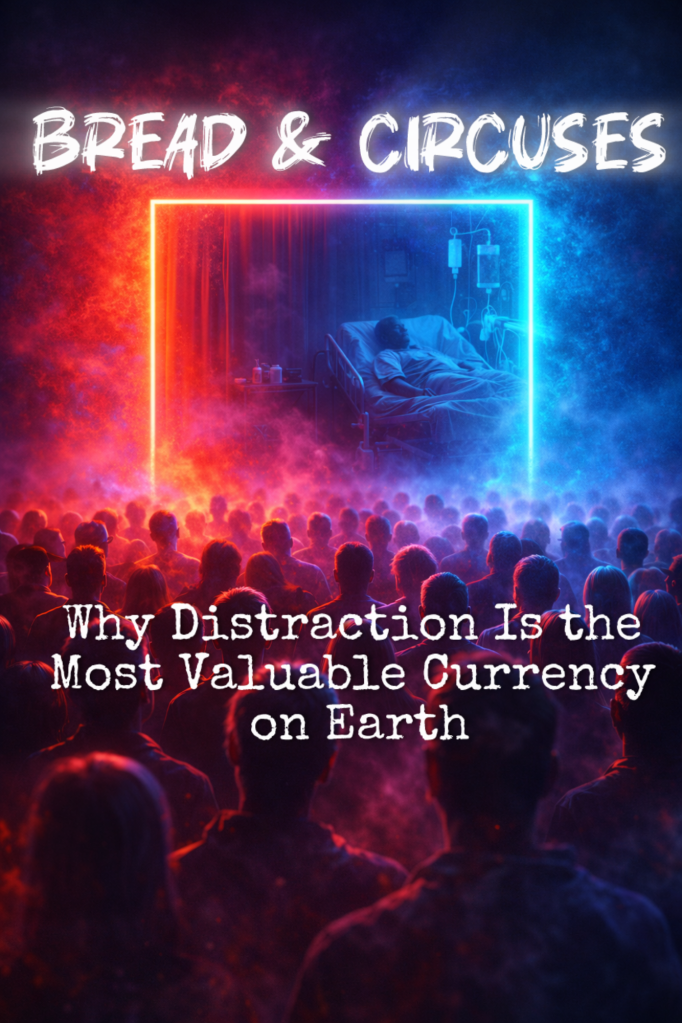
Bread and Circuses: Why Distraction Is the Most Valuable Currency on Earth
📺 💰 👁️
I enjoyed Stranger Things.
Let me say that first, because honesty matters here.
I’ve watched it, enjoyed it, been emotionally pulled in by it like millions of other people.
It’s well made.
The cast is talented.
The nostalgia works.
The story hits the nervous system exactly where it’s meant to.
And then I saw a post.
Not about the plot.
Not about the finale.
But about the money.
How much the series cost to make.
How much each cast member is now earning — millions per season.
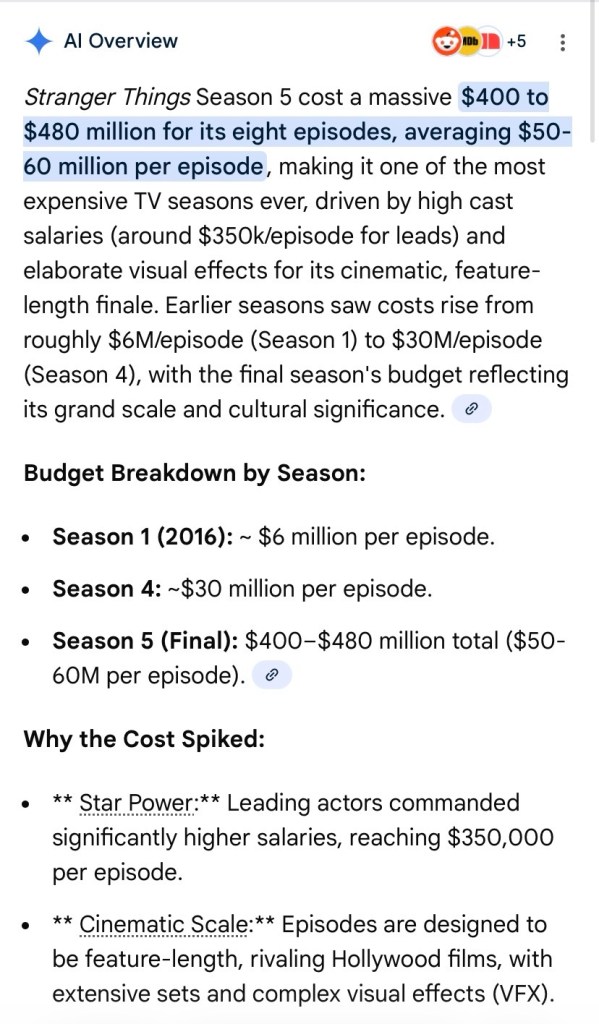
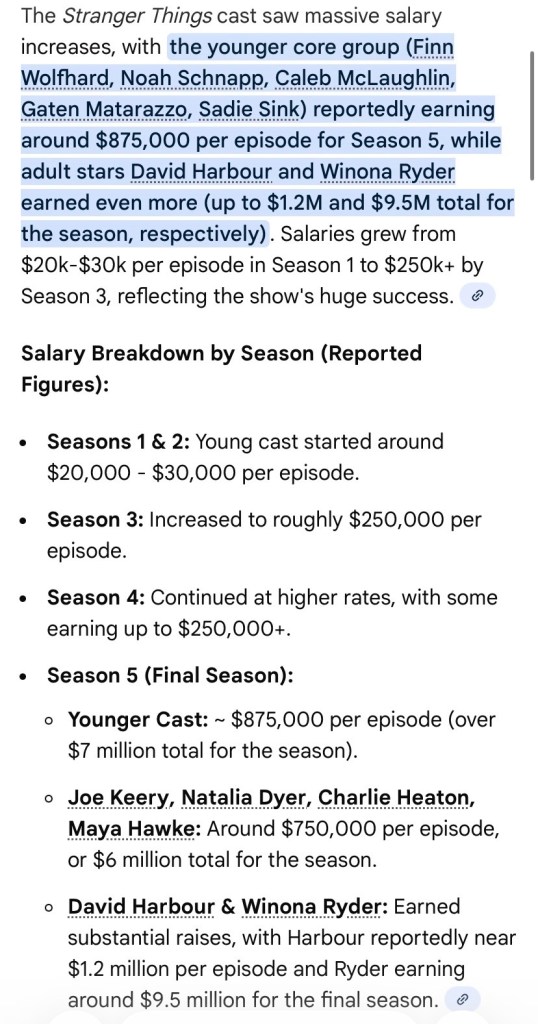

… and something in me quietly recoiled. 🤢
Not because actors shouldn’t be paid.
Not because art has no value.
But because the contrast was nauseating.
People are literally dying because they can’t afford life-saving medications in America and other countries right now.
Families are rationing insulin.
Crowdfunding funerals.
Choosing between rent and healthcare.
Meanwhile, the same amount of money could:
• House thousands of unhoused people for years — not shelters, but stable housing.
• Fund free school meal programs so children don’t rely on teachers quietly buying snacks out of pocket.
• Erase medical debt for entire communities.
• Fully fund addiction treatment and mental health services instead of criminalizing people for being sick.
• Pay nurses, EMTs, and caregivers wages that actually reflect the cost of living.
• Support research into rare diseases that receive little funding because they aren’t “profitable enough.”
• Keep rural hospitals from closing, forcing people to drive hours for emergency care.
• Provide clean water infrastructure in places that still don’t have it.
• Ensure no one has to choose between heat, food, and medication in winter.
None of this is abstract.
None of this is hypothetical.
These are choices — not shortages.
The money exists.
It’s just been assigned elsewhere.
We’re pouring unfathomable amounts of money into stories — into playing pretend — because those stories keep us emotionally occupied/stimulated.
That was the moment the old phrase surfaced in my mind:
“Bread and circuses.”
The phrase comes from Ancient Rome, and it wasn’t meant as a clever jab. It was a warning.
If you keep people fed just enough and entertained constantly, they stop asking dangerous questions.
They don’t revolt.
They don’t organize.
They don’t imagine alternatives.
They stay busy feeling.
And here’s the thing we don’t like to admit in modern society — entertainment is incredibly effective at managing emotion.
Science helps explain what the Romans only sensed intuitively.
Stories don’t primarily engage logic. They bypass it.
👁️ They activate dopamine and reward circuits trigger emotional mirroring.
📺 They create parasocial relationships.
🧬 They synchronize feelings across millions of people at once.
That’s power.
It’s why a single episode can make us cry, rage, hope, or fear more intensely than reading about real-world suffering ever does.
Facts require effort.
Stories happen to us.
We like to treat celebrity culture as if it just emerged naturally.
It didn’t.
Actors, athletes, and entertainers are paid extraordinary sums because they do something few others can do at scale — they capture and direct collective emotion.
They give us catharsis without consequence, empathy without obligation, outrage without action.
We feel deeply — and then we go back to our lives unchanged.
This isn’t about villainizing performers. Many of them are thoughtful, generous, politically aware people.
But systems don’t run on intentions.
They run on incentives.
And a system that benefits from distraction will always reward those who can produce it most effectively.
A chronically entertained population is not asleep.
It’s soothed.
Distraction becomes a pressure-release valve — stress is discharged instead of addressed, grief is processed symbolically instead of collectively, and anger is spent on fictional villains instead of real structures.
We mistake emotional release for resolution.
And because we feel something, we assume something has been done.
This isn’t an attack on art.
I clearly LOVE stories.
This part matters.
Art is not the enemy.
Art is how humans have always survived pain, transmitted truth, and imagined better worlds.
Some stories wake us up.
Some crack us open.
Some remind us of our humanity.
The problem isn’t entertainment.
The problem is when entertainment becomes anesthetic instead of awakening.
When it keeps us just comfortable enough not to look too closely at what’s wrong.
We talk about money like it’s the ultimate power.
It isn’t.
Attention is.
Where attention goes energy follows, emotion follows, belief follows, and behavior follows.
Which means how we spend our attention is not neutral.
It’s political.
It’s ethical.
It’s personal.
What if the most radical act isn’t rejecting entertainment… but consuming it consciously?
What if we asked:
🍽️ Is this nourishing me — or numbing me?
🛌 Is this helping me understand reality — or escape it?
💰 Who benefits from where my attention goes?
Rome fell eventually.
Not because of bread.
Not because of circuses.
But because distraction can’t substitute for justice, progress, nor evolution forever.
🌀
 limitlessstimulus.com
Leave a comment