We Weren’t Meant to Grow Up Without Our Elders
🧬 🔥 🫀
Social media taught us to speak in generations.
“Boomers.”
“Gen X.”
“Millennials.”
“Gen Z.”
At first, it felt clarifying — even empowering. Suddenly there were words for things that had gone unnamed.
Harmful norms were challenged.
Abuse was called what it was.
Authority stopped being unquestioned by default.
That mattered.
But somewhere along the way, the labels stopped being descriptive and started becoming dismissive.
Instead of “What can I learn from you?”
We moved to “Oh. You’re one of those.”
And with that shift, we quietly severed one of the most ancient sources of human stability we’ve ever had: intergenerational wisdom.
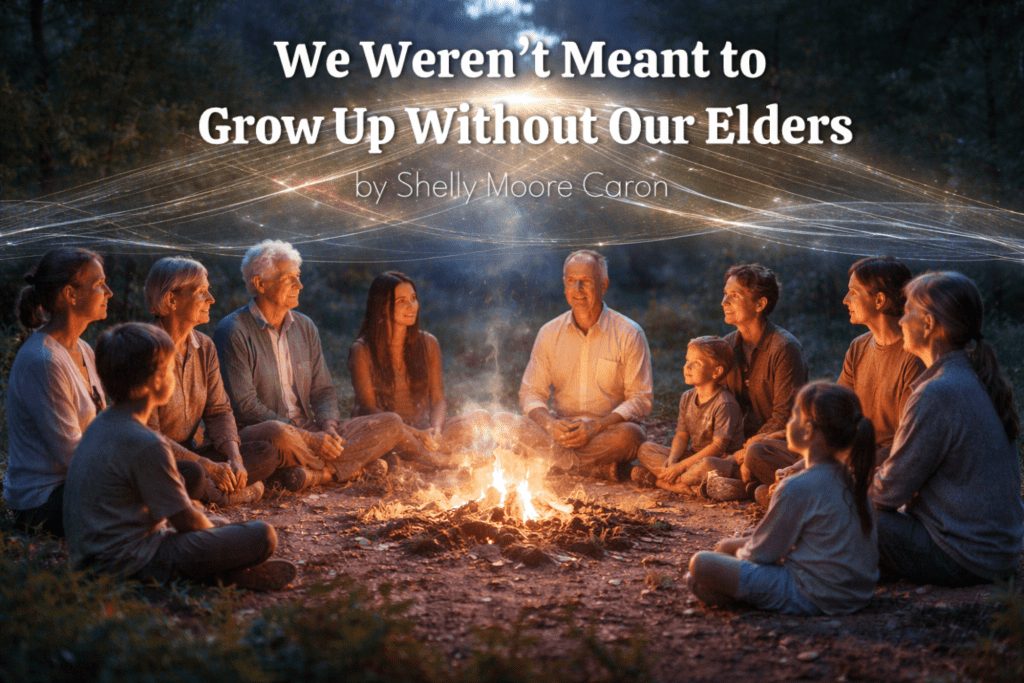
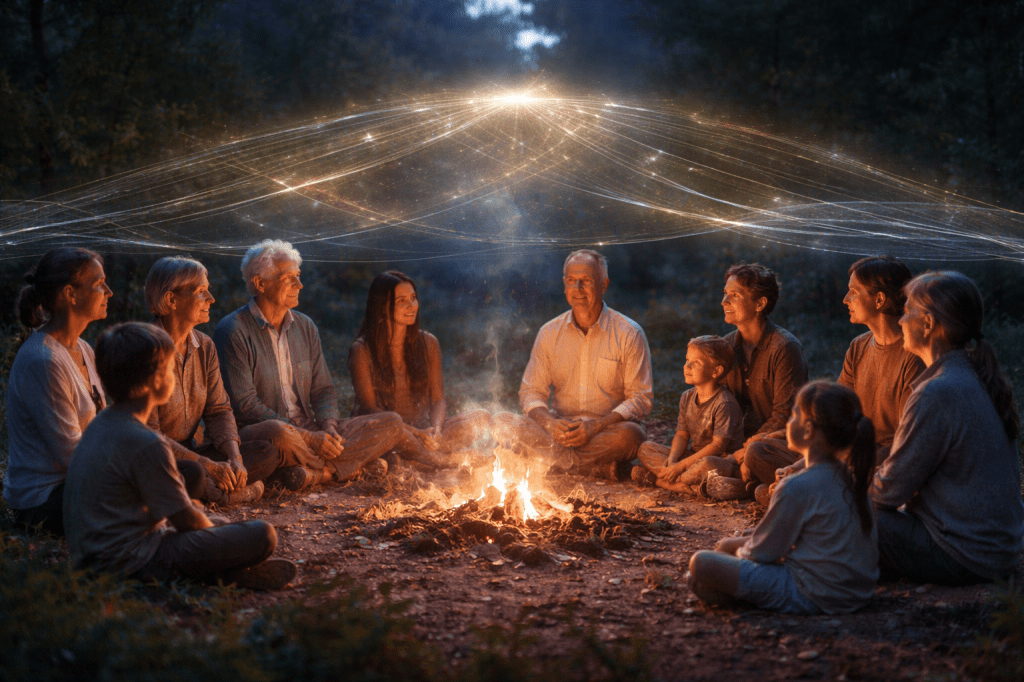
For most of human history, people didn’t live in generational echo chambers.
They lived in circles.
Children, adults, elders — all present, all contributing. Knowledge moved vertically and horizontally at the same time.
Stories weren’t entertainment; they were survival tools.
Warnings, skills, emotional regulation, and meaning were passed down through proximity, not platforms.
From a scientific standpoint, this wasn’t sentimental. It was regulatory.
Humans synchronize nervous systems through shared presence. We attune to one another’s rhythms, tones, and pacing.
Elders tend to bring slower tempos — perspective, context, restraint.
Younger people bring novelty, adaptability, and momentum.
Together, they create balance.
Remove one layer of that system, and the whole thing destabilizes.
Social media didn’t just fragment attention.
It fragmented lineage.
It replaced elders with influencers, lived experience with hot takes, communal memory with algorithms, and nuance with virality.
And then it sorted us like the hat in Harry Potter — not by values or lived experience, but by birth year.
Once that happened, something essential broke.
Elders became caricatures.
Youth became trends.
Middle generations disappeared entirely.
This wasn’t organic conflict.
It was algorithmic sorting.
Let’s not romanticize the past.
Some elders were bigoted.
Some traditions were harmful.
Some authority structures absolutely deserved to be challenged.
Calling that out wasn’t wrong.
It was very… very right.
But there’s a difference between deprogramming and discarding.
We confused the two, throwing the baby out with the bath water, as they say.
And in doing so, we lost access to something irreplaceable: wisdom shaped by survival, endurance, and lived consequence — the kind that doesn’t come from theory or ideology.
🧬
Modern science is beginning to confirm what indigenous cultures have known all along: trauma and resilience are inherited.
Epigenetics shows us that stress, famine, violence, and chronic fear can alter gene expression — not changing DNA itself, but how genes are activated or silenced — and that these changes can be passed down for generations.
In other words, elders don’t just carry stories.
They carry biological memory.
They are living archives of what the nervous system has survived — and what it learned in order to survive it.
When we cut ourselves off from elders, we aren’t just losing advice.
We’re losing access to context for our own pain.
From a neuroscience perspective, constant generational conflict keeps people in a low-grade threat state.
When identity hardens, curiosity collapses.
When curiosity collapses, empathy follows.
When empathy disappears, ideology rushes in to fill the gap.
People become easier to outrage.
Easier to polarize.
Easier to isolate.
No conspiracy required — just incentives.
Division drives engagement.
Engagement drives profit.
Profit drives design.
Intergenerational healing doesn’t trend.
Conflict does.
Spiritually — regardless of belief system — humans are lineage beings.
We don’t arrive here alone.
We carry the imprints of those who came before us: biologically, emotionally, and culturally.
Wisdom doesn’t belong to a generation.
It belongs to a continuum.
When we sever ourselves from that continuum, we don’t become freer.
We become untethered.
Rootless.
And deeply lonely.
You can feel it everywhere now — people hungry for guidance, yet suspicious of anyone older than them.
Elders isolated, dismissed, written off.
Everyone convinced the other side is the problem.
That’s not awakening.
That’s cultural amnesia.
We lost shared regulation story as medicine, patience for complexity, and humility across time.
We lost the ability to say:
“You lived something I haven’t yet. Teach me.”
And just as importantly:
“You see something I no longer can. Show me.”
That exchange used to be how societies stayed sane.
This isn’t a call to excuse harm or return to unexamined tradition.
It’s a call to integrate.
To hold discernment and continuity at the same time.
To recognize that wisdom doesn’t expire with age — and progress doesn’t belong exclusively to the young.
We didn’t evolve in generational warfare.
We evolved in relationship.
What if the work now isn’t choosing sides…
…but repairing the bridge?
What if instead of feeding the beast of division, we remembered how to listen across time?
Not to agree.
But to synchronize again.
Consider the implications.
How everything… and everyone… could potentially come back together…
… and evolve. 🫀🧬
 limitlessstimulus.com
Leave a comment