Written by Shelly Moore ©️ 2025
Let’s get this out of the way first:
I love true crime.
I love the deep, raw study of human darkness — the twisted psychology, the unanswered questions, the tragic puzzle pieces that make monsters out of ordinary people.
It’s fascinating. It’s addictive. And it’s everywhere: podcasts, documentaries, TikTok breakdowns, entire TV channels devoted to turning real human horror into bedtime background noise.
I get it. I really do.
But we need to talk about what it’s doing to us — and to the rooms we live in.
•
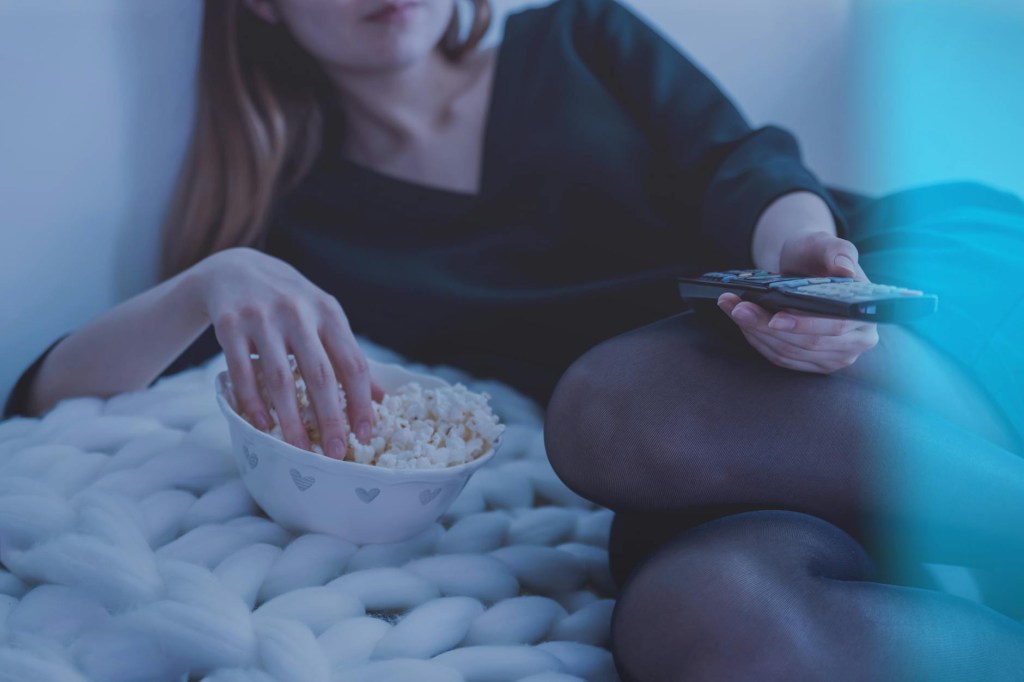
🗝️ We Don’t Just Watch Horror — We Eat It.
When we binge true crime, we’re not just studying history or satisfying morbid curiosity.
We’re feeding our nervous system a steady drip of fear, rage, and helplessness.
We train our subconscious to expect the worst from humanity.
We normalize stories where people end violently, families break apart, innocence is shattered — over and over, daily.
Maynard James Keenan (Tool) captured this perfectly in his song, Vicarious:
Eye on the TV, ’cause tragedy thrills me
Whatever flavor it happens to be like
“Killed by the husband”
“Drowned by the ocean”
“Shot by his own son”
“She used the poison in his tea”
“Then kissed him goodbye”
That’s my kind of story
It’s no fun ’til someone diesDon’t look at me like I am a monster
Frown out your one face, but with the other
Stare like a junkie into the TV
Stare like a zombie while the mother holds her child
Watches him die
Hands to the sky crying, “Why, oh why?”‘Cause I need to watch things die
From a distance
Vicariously, I live while the whole world dies
You all need it too, don’t lie
We gorge ourselves on the worst-case scenarios of other people’s suffering — a safe distance away, behind our screens. And then we wonder why we can’t sleep. Why our house feels heavy. Why anxiety hums like a low-grade fever even when life is calm. Big mystery, Scooby Doo.
🕯️ Energy is Contagious — Even Stories.
Here’s the deeper truth the shows won’t tell you:
Your energy field — call it aura, vibe, mental atmosphere — doesn’t stop at your skin. This is no longer fringe; this is scientifically proven.
Every brutal story you consume lingers in that field. It thickens the emotional air in your home. It soaks into your pillow. It hums in your bloodstream when you sit with your family.
You may think “It’s just entertainment” — but your primal brain doesn’t know that.
It catalogues every tale as a fresh threat: more reason to stay hyper-vigilant, suspicious, emotionally on edge.
And like incense smoke drifting from room to room, that anxiety drifts too — your kids, your animals, your partner. They feel the static, even if they don’t know the source.
🫧 So What Do We Do? Stop Watching Forever?
Not necessarily.
I’m not saying become naive, pretend evil doesn’t exist, or stop being fascinated by the psychology of it all. I’m not sure I could. It’s half of what makes us human, really.
I’ll still watch. I’ll still read. But I do it consciously now, like handling a ritual dagger: carefully, with clear intention, with a cleansing after.
A few things that help:
✅ Be mindful of your energy budget — one documentary is fine; five episodes back to back turns your living room into an energetic crime scene. Legit.
✅ If you share a home with others — be mindful what you broadcast into shared spaces.
✅ Cleanse your mind afterward: music, light, laughter, fresh air.
✅ Don’t sleep with horror humming in your subconscious.
•
🗝️ Feed Your Mind Better — Or At Least Balance the Diet.
Maynard had it right: we live vicariously through the suffering of others. But living like that too long makes you forget your own sacred, mundane life: the coffee cup, the loved ones breathing safely next to you, the miracle that your heart still beats unbroken.
So study the darkness — but feed your spirit more light.
Keep the paradox — but keep the balance too.
Your mind, your house, and everyone you love will thank you.
••••••
✨ Tell me your take: Are you addicted to the worst parts of human nature too? How do you balance it? Let’s be honest about it — and maybe more conscious about it, too.


Leave a Reply